



African Geo Summer

Geodesy for a resilient Africa Summer School

Empowering solutions for flood, droughts, Sea level rise, Land subsidence, water scarcity, Urban climate modelling and fisheries sustainability.
 

29 Jun – 3 Jul 2026 • AIMS-Cameroon, Limbe, Cameroon

The Summer school will be held in person; however, virtual attendees will not be able to give presentations. Registration will be open from February 6 to March 8, 2026.

Partners & Sponsors

From Data to Action: Tackling Africa’s Climate Challenges

The Geodesy Summer School for a Resilient Africa, the first of its kind for Africa and its Small Island Developing States (SIDS), will take place in Limbe, Cameroon, from June 29th to July 3rd, 2026. This intensive program will train up to 30 Africans early- and mid-career researchers, including Master’s and PhD students, postdoctoral fellows, young scientists, NGO leaders, climate activists, and key stakeholders, equipping them with advanced expertise in satellite data processing, reference frame applications, and geodetic analysis. Through hands-on training and exposure to the latest scientific methods, participants will gain the tools to monitor environmental threats and develop strategies for long-term resilience.

The summer school will strengthen the capacity of early career scientists and climate-engaged communities to respond to environmental change, establish a collaborative hub for knowledge exchange, reduce reliance on external expertise, and empower African-led solutions. This initiative represents a decisive step toward enabling the continent and its island nations to safeguard people, resources, and ecosystems in a rapidly changing world.

website picture 1

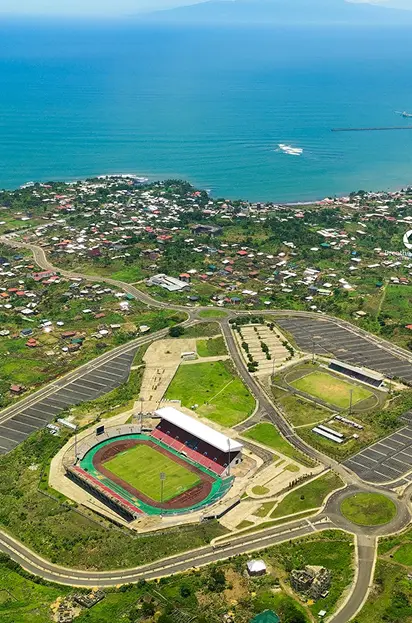
Limbe city bird’s-eye view. Credit: @ericjoelmanej

The Challenges We’re Tackling Together

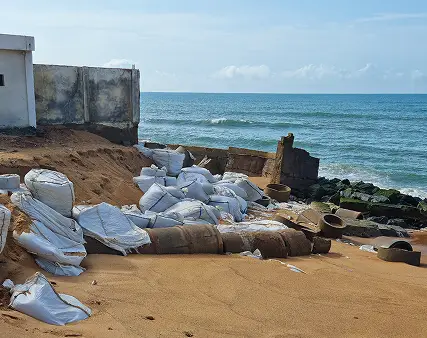
sea level rise

Sea Level Rise, land subsidence, coastal flooding and tide modelling

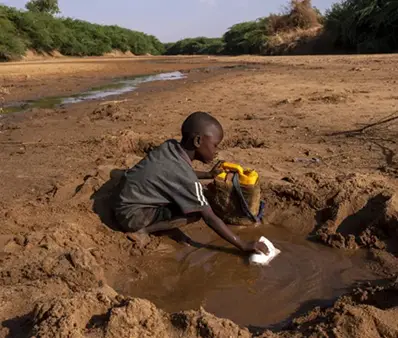
child droup scarcity
 Extreme droughts, water scarcity, hydrological extremes and terrestrial water storage variability
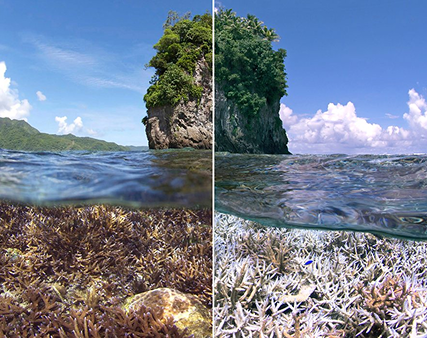
image 20

Marine Heatwaves, Coral Bleaching, and Sustainable Fisheries

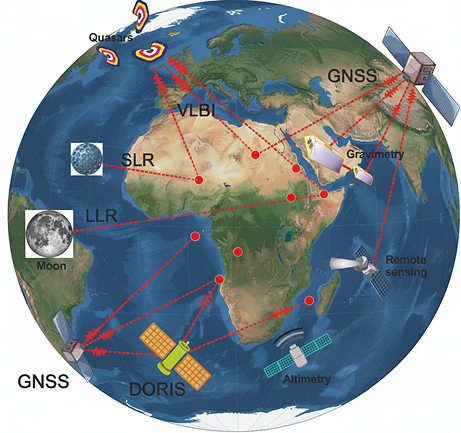
An Integrated Satellite And In Situ Measurement Approach

Tap any icon on the map to uncover fascinating facts!
download (2) 1
LLR VLBI GNSS SLR DORIS Remote Sensing Satellite Altimetry

LLR

(Lunar Laser Ranging)

A technique that measures the precise distance between Earth and the Moon by timing laser pulses bounced off reflectors on the lunar surface. It is used to test theories of gravity and study the Earth-Moon system.

VLBI

(Very Long Baseline Interferometry)

Uses a global network of radio telescopes to observe distant quasars, providing a stable reference frame to measure tectonic plate motion and Earth's orientation in space with extreme precision.

GNSS

(Global Navigation Satellite System)

Uses a global network of radio telescopes to observe distant quasars, providing a stable reference frame to measure tectonic plate motion and Earth's orientation in space with extreme precision.

SLR

(Satellite Laser Ranging)

Measures the distance to Earth-orbiting satellites by timing laser pulses bounced off them. It is essential for determining precise satellite orbits, Earth's gravity field, and the center of mass of the Earth system.

DORIS

(Doppler Orbitography and Radiopositioning Integrated by Satellite)

A system where a satellite measures the Doppler shift from a global network of ground beacons to determine its own orbit with high accuracy. It is critical for satellite altimetry missions that measure sea level.

Remote Sensing

The science of acquiring information about the Earth from a distance, typically from satellites or aircraft. It is used to monitor land, oceans, and atmosphere, including applications like mapping deforestation, measuring sea surface temperature, and tracking weather patterns.

Satellite Altimetry

A specific remote sensing technique that uses radar pulses from a satellite to measure surface height with centimeter-level precision. It is the primary tool for measuring global sea level rise, ocean currents, and the changing height of ice sheets.
Meet the Lecturers

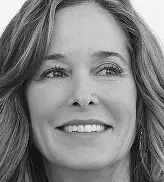
image 37

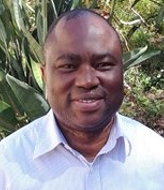
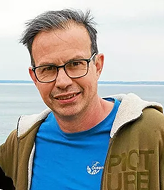
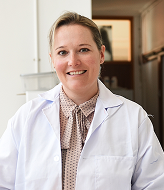
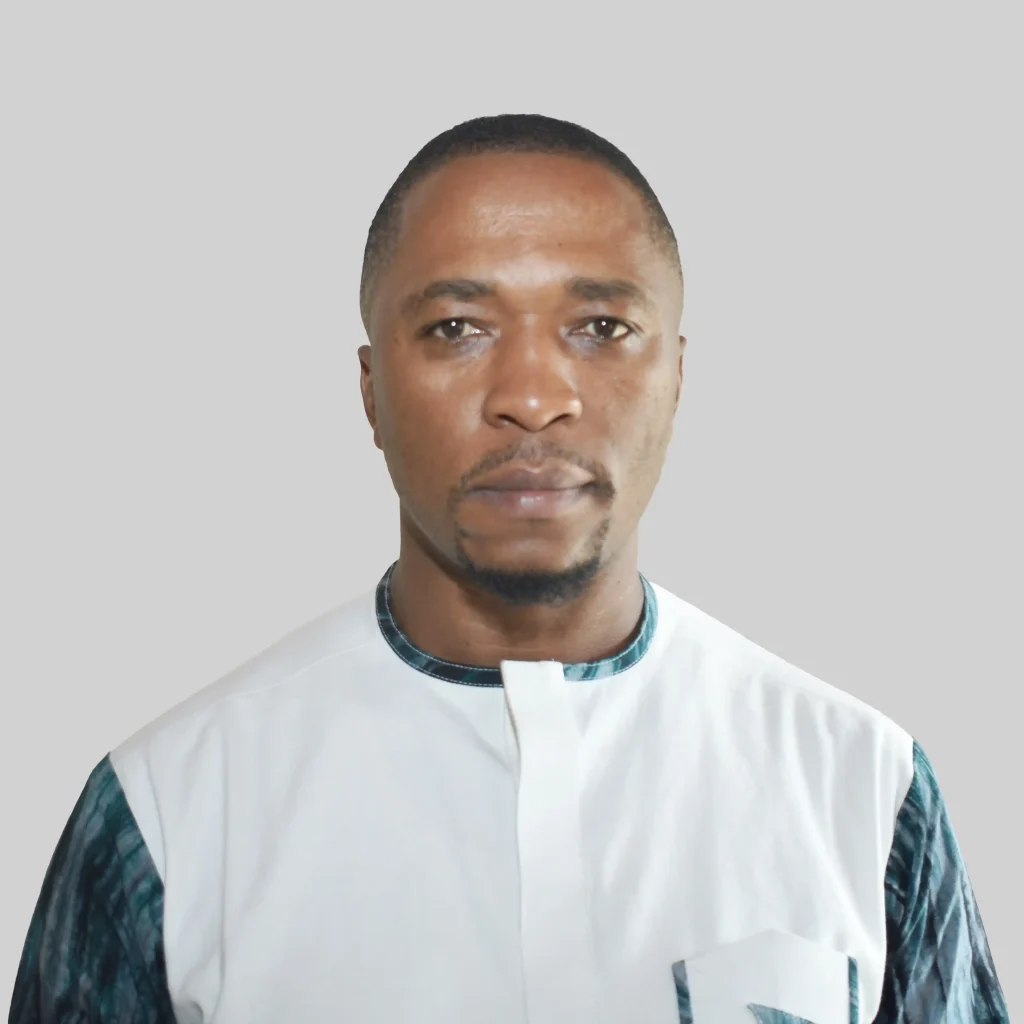
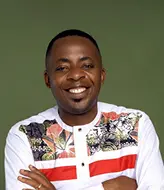
Franck Ghomsi

National Institute of Cartography, Cameroon.
CEOS, University of Manitoba, Canada.
University of Cape Town, South Africa

image 49

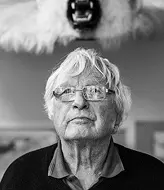
Ola M. Johannessen

Nansen Scientific Society, Bergen, Norway.
Knight of the Royal Norwegian Order of St.Olav in 2008.

image 39

Julienne Stroeve

CEOS, University of Manitoba, Canada.
Alfred Wegener Institute, Helmholtz Centre for Polar and Marine Research, Germany.

image 40

Babatunde J. Abiodun

Nansen-Tutu Centre, University of Cape Town, South Africa.

image 52

Fabrice Collard

OceanDataLab, France.

image 42

Sarah Fawcett

Department of Oceanography, University of Cape Town,
South Africa.

image 46

Sakaros Bogning

University of Douala, Cameroon.

image 34

Rebekka Steffen

Lantmäteriet – Swedish Mapping, Cadastral and Land Registration Authority.

image 48

Jean Marcel

National Institute of Cartography, Cameroon.
Ministry of Scientific Research and Innovation, Cameroon.

image 36

Leonard Ohenhen

Department of Earth System Science, University of California Irvine, USA.

image 33

Gaël Kermarrec

Leibniz University Hannover, Hannover, Germany.

image 51

Michel Tchilibou

Collecte Localisation Satellites, Toulouse, France.

image 41

Daneeja mawren

South African Environmental Observation Network,
South Africa.

image 47

Serge Henri Kemgang

Ministry of Livestock, Fisheries and Animal Industries, Cameroon. 

image 35

Benjamin M. Kitambo

Institute of Geodesy, University of Stuttgart, Germany.
University of Lubumbashi, Lubumbashi, DR Congo.
Congo Basin Water Resources Research Center, Kinshasa, DR Congo.

Local Committee

Daniel Duviol Tcheutia

AIMS-Cameroon, Limbe, Cameroon.

image 53

Vondou Derbetini A.

University of Yaoundé I, Cameroon.

image 44

Yap Loudi

National Institute of Cartography, Cameroon.

image 45

Thierry C. Fotso-Nguemo

National Institute of Cartography, Cameroon.

Raphaël ONGUÉNÉ

University of Douala, Cameroon.

5 Days of Immersive Learning

Practical training, expert guidance, and projects that matter

Day
1

Geodesy basics & orientation

Introduction to geodesy and Earth science, focusing on variability and dynamics connecting land and ocean processes.

Day
2

In Situ Data Processing

Hands-on training in in situ data processing and baseline analysis, including land subsidence and uplift using InSAR. Develop actionable insights for monitoring land and water dynamics.

Day
3

Satellite Altimetry & Ocean Variability

Introduction to processing satellite altimetry data to track sea level changes, tide modeling, marine heatwaves, and coastal dynamics. Produce visualizations and analyses suitable for research or policy applications

Day
4

Inland & Integrated Applications

Combine GRACE, GNSS, and altimetry data in practical case studies. Refine projects for real-world decision-making and stakeholder engagement.

Day
5

Presentations, policy & Networking

Present projects, draft policy briefs, and build a professional network to support future climate resilience initiatives.

Our Partners

nansen tutu logo uct (2) 1
nansen scientific scociety 1
image 22
image 26
image 27
image 25
image 24
tecvator blue teal 1